
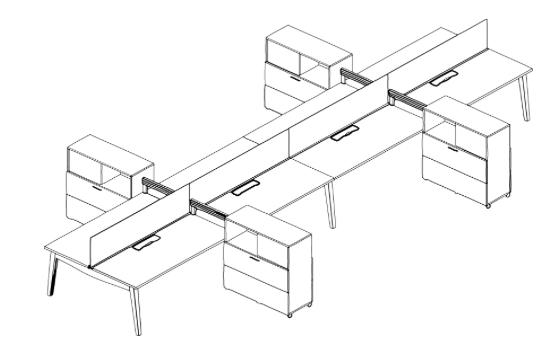
Benching desks, or benching systems, are a modern office layout solution characterized by long, continuous, shared work surfaces that resemble a bench. They are designed to accommodate multiple employees side-by-side or back-to-back in an open-office environment.
Here are the key characteristics and benefits:
- Shared Work Surface: The defining feature is the communal, elongated desk space that connects multiple individual workstations, often sharing structural components like legs and frames.
- Open Concept: Benching systems eliminate the high walls of traditional cubicles, promoting a more open and collaborative workspace. Low, minimal partitions or screens may sometimes be used for a slight sense of visual division.
- Collaboration Focused: The close proximity and lack of barriers are intended to foster spontaneous interaction, communication, and teamwork among employees.
- Space Efficiency: By utilizing shared components and a streamlined design, benching maximizes the number of people who can be accommodated in a given floor area, making it a cost-effective and space-saving solution.
- Flexibility and Scalability: These modular systems can typically be easily expanded, reconfigured, or rearranged to adapt to growing teams, changing business needs, or “hot-desking” setups where employees don’t have assigned desks.
- Integrated Features: Modern benching often includes integrated power and data solutions, as well as optional features like under-desk storage, mobile file cabinets, or height-adjustable desks.