Selecting the right size of cubicles is one of the most important decisions when planning a productive and efficient office layout. The dimensions of each workstation directly influence employee comfort, privacy, collaboration, and overall space usage. A carefully structured cubicle configuration supports operational demands while making the most of available square footage.
Modern offices rely heavily on modular cubicles and workstations to organize teams and define work zones. When paired with appropriately scaled office desks, these systems create structured environments that support both focused work and communication.
Determining the right dimensions involves more than placing as many stations as possible within a floor plan. Workflow patterns, departmental responsibilities, and long-term expansion goals all play a role in identifying the ideal configuration.
Below is a comprehensive guide to help you determine the ideal cubicle sizes for your workspace.
Understand Standard Cubicle Dimensions
Understanding common cubicle measurements makes the selection process easier. Standard sizes often include:
- 6 feet by 6 feet
- 6 feet by 8 feet
- 8 feet by 8 feet
Smaller configurations, such as 5 feet by 5 feet, may appear in high-density environments, while executive-style workstations can exceed 8 feet by 8 feet.
The appropriate size of cubicles largely depends on job responsibilities. Employees who primarily use laptops and minimal paperwork may work comfortably in smaller layouts. Team members managing physical files, dual monitors, or frequent calls typically require more space.
Evaluate Your Available Floor Space
Accurate measurements form the foundation of effective space planning. Start by calculating the total usable square footage of your office. Deduct areas designated for hallways, conference rooms, reception spaces, and storage zones.
When calculating workstation capacity, include adequate space for walkways and accessibility. Most offices reserve three to four feet for main aisles to support safe and comfortable movement.
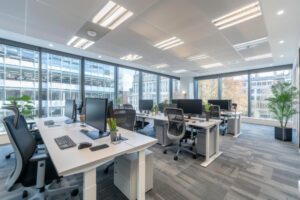
A scaled floor plan helps visualize how the size of cubicles interacts with shared areas and traffic flow. Overcrowded layouts often reduce productivity and create a cramped atmosphere.
Align Cubicle Size With Job Function
Different departments have distinct workspace requirements. Administrative teams handling paper documentation often benefit from extended desk surfaces and additional storage. Sales or customer service teams working primarily with digital tools may function efficiently in mid-sized configurations.
Executive roles or managerial positions may require expanded workstations for meetings within their cubicle. In contrast, collaborative departments may benefit from slightly smaller stations combined with shared breakout areas.
Matching workstation dimensions to operational realities leads to better long-term performance than applying a uniform layout across every department.
Consider Privacy and Panel Height
Cubicle size is not only about floor dimensions. Panel height plays a major role in defining privacy and acoustics.
Standard panels typically range from 42 inches to 72 inches. Lower panels support visibility and open communication. Taller panels create greater separation and reduce visual distractions.
In open-plan environments, balancing privacy with openness is important. Larger cubicles with higher panels may suit roles requiring concentration, while smaller stations with lower partitions work well in team-driven settings.
A thoughtful combination of panel height and square footage produces a well-balanced workstation layout.
Plan for Technology and Equipment
Modern workstations frequently include multiple monitors, docking stations, telephones, and storage components. Each element requires adequate space.
When planning the size of cubicles, consider:
- Monitor count and placement
- CPU or docking station storage
- Filing cabinets or mobile pedestals
- Personal storage needs
Failing to account for equipment can result in cluttered surfaces and reduced efficiency. Built-in cable management systems and integrated office desks designed for technology-heavy roles help maintain clean and organized work areas.
Balance Density With Comfort
Maximizing the number of employees per square foot may appear economical, yet excessive density can negatively affect morale and performance. Adequate elbow room, leg space, and storage contribute directly to daily comfort.
Workplace design research consistently shows that cramped environments elevate stress and noise levels. Slightly larger cubicles often support better focus and sustained productivity. Striking the right balance between capacity and comfort is key to long-term operational success.
Account for Future Growth
Office needs evolve as businesses expand. Selecting modular cubicles and workstations allows for reconfiguration when team sizes change.
Flexible systems simplify the process of adding or rearranging stations without replacing entire furniture collections. Anticipating growth when determining the size of cubicles reduces the likelihood of costly redesigns in the future.
Forward planning strengthens both financial efficiency and operational continuity.
Integrate Storage and Shared Areas
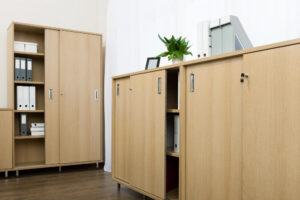
Individual workstations should not carry the entire burden of storage. Centralized filing systems and shared supply cabinets reduce the need for oversized cubicles.
Break rooms, meeting spaces, and collaboration lounges also influence workstation sizing decisions. Access to shared amenities makes it possible to design slightly smaller cubicles without compromising functionality. A balanced layout distributes workspace and communal areas strategically across the office.
Evaluate Traffic Flow and Accessibility
Clear pathways are fundamental in any office layout. Avoid positioning cubicles in ways that obstruct entryways or create bottlenecks.
Accessibility standards must guide spacing decisions to support mobility and safety across the workspace. Careful aisle planning and workstation orientation contribute to a clean, organized, and professional setting.
Match Aesthetic With Corporate Identity
Cubicles and office desks contribute significantly to visual branding. Sleek finishes and cohesive panel designs create a unified appearance.
Selecting consistent materials and colors across departments enhances professionalism. Larger executive-style workstations may signal leadership roles, while uniform mid-sized cubicles reflect team equality.
Design cohesion strengthens the overall impression of the workspace.
Conduct a Layout Test
Testing layouts before full installation reduces uncertainty. Digital renderings or mock setups help visualize how the size of cubicles integrates with the surrounding space.
Some organizations assemble sample stations to evaluate comfort and workflow in real conditions. Employee feedback during this stage often reveals valuable insights that refine the final configuration. A structured evaluation process minimizes costly adjustments after installation.
Selecting Cubicle Sizes That Support Productivity and Growth
The right cubicle dimensions balance space efficiency, employee comfort, and long-term flexibility. Careful planning of workstation size, layout, and panel configuration creates an environment that supports both individual focus and team collaboration.
At NJ Office Furniture Depot, we help organizations design corporate offices, reception and collaborative areas, training and banquet spaces, and facility environments with tailored furniture solutions.
We serve businesses across NJ, PA, NY, and nationwide with new, used, and pre-owned office furniture that aligns with operational goals and budget strategies. Get in touch today to plan a workspace that fits your team and your future.